
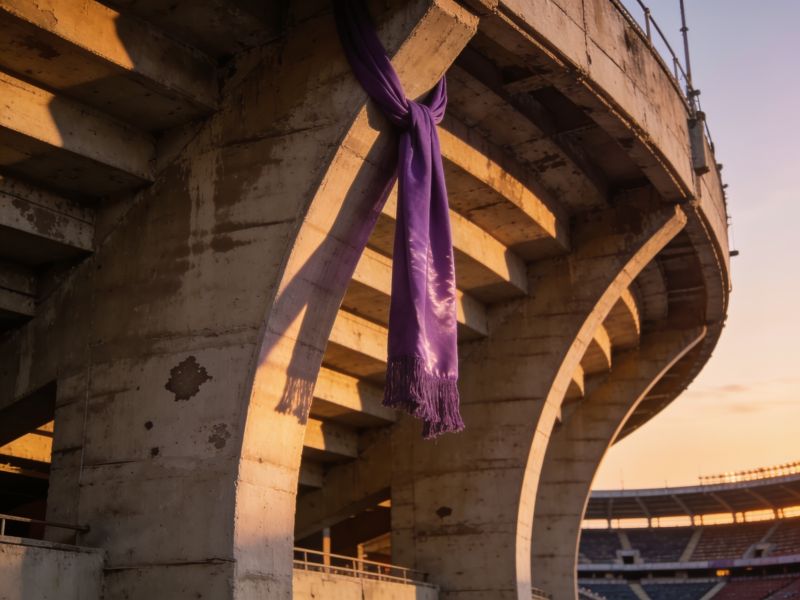
Fiorentina hasn’t lifted a Serie A trophy since 1969, yet the club’s hold on Florence feels older than the Renaissance itself. Walk past the Duomo on a matchday and you’ll see it: purple scarves knotted around backpack straps, kids in Batistuta shirts from two decades ago, a barista arguing about the midfield diamond with a customer who’s clearly in no rush. The team isn’t just a pastime here. It’s a civic argument that never ends.The Artemio Franchi stadium tells the story better than any trophy cabinet. Built in 1931, its concrete curves and swooping roof feel like a relic from another era—because they are. I sat in the Curva Fiesole last spring。rain dripping through a seam above row 14, and watched a 1-0 grind against a mid-table side. The football was forgettable. The noise wasn’t. When the home side pressed, the whole stand seemed to lean forward, a single organism willing the ball into the box. Fiorentina’s supporters don’t demand perfection;they demand recognition. They want a team that reflects the city’s stubborn elegance.
That tension between beauty and pragmatism has defined Fiorentina for decades. The club’s greatest era—the 1950s and ’60s—produced two scudetti and a European Cup final, but also a reputation for selling its best players. Roberto Baggio left in 1990. Gabriel Batistuta, the man who promised to stay and then didn’t。departed in 2000. Rui Costa followed a year later. Each sale felt like a small betrayal, yet the Franchi kept filling up. When the club collapsed into bankruptcy in 2002, fans didn’t walk away;they organised, campaigned, and helped rebuild from Serie C2. That’s not romantic hindsight. It’s the reason the Della Valle family’s ownership, for all its faults, was initially greeted with something close to relief.On the pitch, Fiorentina’s modern identity swings between adventurous and anxious. Vincenzo Italiano’s high-pressing, man-oriented system dragged the club to consecutive Conference League finals in 2023 and 2024。but the same intensity often left them exposed at the back. I watched a 4-2 defeat to Inter last season where Fiorentina looked exhilarating for twenty minutes and then utterly lost. The midfield chased shadows. The back line stepped up at the wrong moment. It’s a familiar story: the Viola can outplay anyone for a half, then unravel. That inconsistency isn’t just tactical—it feels temperamental, almost Florentine. The city’s own history is full of brilliant flashes and sudden reversals.
What keeps Fiorentina relevant isn’t the hope of a title. It’s the texture of the experience: the cheap tickets in the Curva, the pre-match walk along the Arno, the way a Tuesday night Coppa Italia tie can feel like a family argument. The club’s new ownership, led by Rocco Commisso。has stabilised the finances and started renovating the Franchi—a project long overdue. But the deeper question remains. Can Fiorentina build something lasting without selling its soul, or its best players, every few years?
I don’t have a clean answer. Neither do the fans. They keep showing up anyway, which is its own kind of verdict.